While macronutrients (carbohydrates, protein, and fats) provide the energy and building blocks dancers need, micronutrients are just as essential for health and performance. For dancers, paying attention to nutrients including calcium, iron, and vitamin D is especially important, as they play a central role in maintaining strong bones, preventing fatigue, and reducing injury risk.
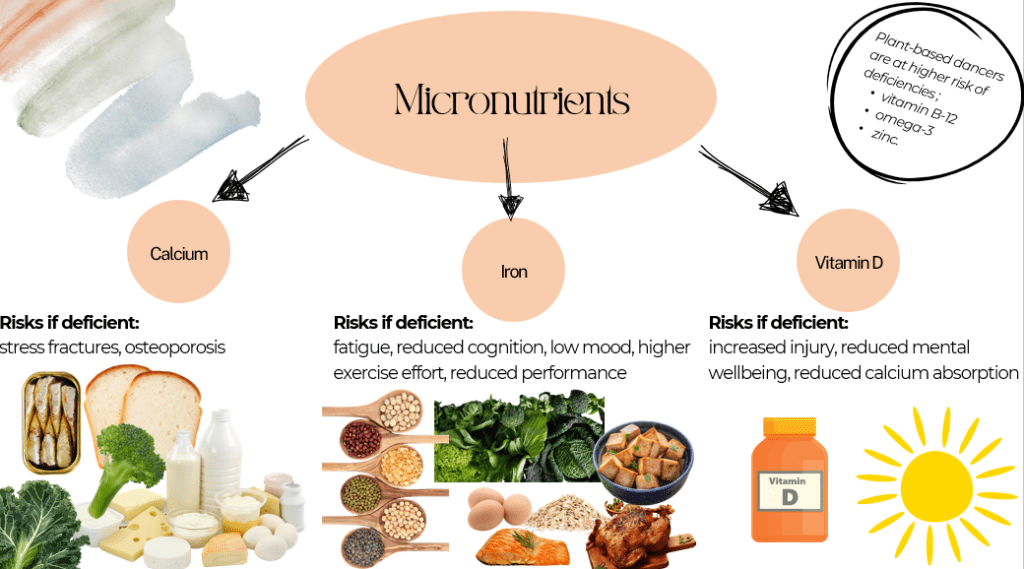
Here’s an infographic highlighting the risk of deficiencies and where we can find each nutrient. For more details about the functions of each nutrient and other important considerations see below!
Calcium
Function:
- Muscle contraction
- Blood clotting
- Bone/tooth structure
- Nerve conduction
Considerations:
- Aim for at least 3 portions of dairy or fortified dairy alternatives/day (some clinical conditions have higher requirements e.g. coeliac disease).
- Vitamin D is required to aid calcium absorption.
- Supplementation is not routinely recommended.
Higher risk of deficiency: If you are following a dairy-free diet ensure fortified alternatives and plant-based sources are included. Or if your overall energy intake is low then a higher intake or supplementation might be advised to optimise bone health. Please seek individual advice if you have any concerns.
Iron
Function:
- Important for haemoglobin production (needed in red blood cells to transports oxygen)
- Important for myoglobin production (required for muscles to uptake oxygen)
Considerations:
- Eating non-haem iron (plant-based iron sources) with vitamin C can help your body to absorb it better e.g. add oranges, kiwi or strawberries to breakfast cereal or add lemon or red pepper to lentils, beans or quinoa.
- Foods containing phytates (bran-containing cereals) or tannins (tea and coffee) can make it more difficult for your body to absorb iron so aim to eat iron containing foods away from having your cuppa!
- Supplementation is not routinely recommended. If anaemia is diagnosed then supplementation should be prescribed by a medical professional (Gastrointestinal symptoms are possible side effects of iron supplements).
Higher risk of deficiency: If you have heavy periods, are pregnant, have low overall energy intake or are vegan or vegetarian.
Vitamin D
Functions:
- Regulates calcium and phosphate metabolism
- Bone Health
- Immune function
- Reduces inflammation
Considerations:
- Supplementation is recommended in the UK between September and March (year-round if minimal exposure to sunlight) – Adults: 10-15mcg/day.
- Aim to get 15 minutes of sunlight outdoors/day with no hat, no sunscreen and arms exposed. Be aware of the risks of sun damage with longer periods of sun exposure, it is recommended to be sun safe, please see the guidance on the NHS website about sun safety.
Higher risk of deficiency: Dancers with brown or black skin and during winter months.
Plant-based Dancers
| Plant-based dancers are at higher risk of deficiencies including vitamin B-12, omega-3 fatty acids and zinc. Vitamin B-12 should be supplemented or can be found in fortified products. Omega- 3 fatty acids can be found in rapeseed, hemp, and flaxseed oil or can be supplemented. Zinc can be found in wheat germ, beans, nuts, seeds, mushrooms and some fortified breakfast cereals. |
Let me know if you have found this helpful!
 My Dance Dietitian